Storm & Roof Leak Water Damage in Jeffersonville, IN
Storm and roof leak water damage in Jeffersonville, IN tends to arrive in spring, when severe thunderstorms, hail and high winds roll across Kentuckiana. Torn shingles, fallen limbs and wind-driven rain open the house to water, and power outages knock out sump pumps at the same time. Our crew tarps openings, removes water, dries attics, ceilings and walls, and documents everything for your claim.
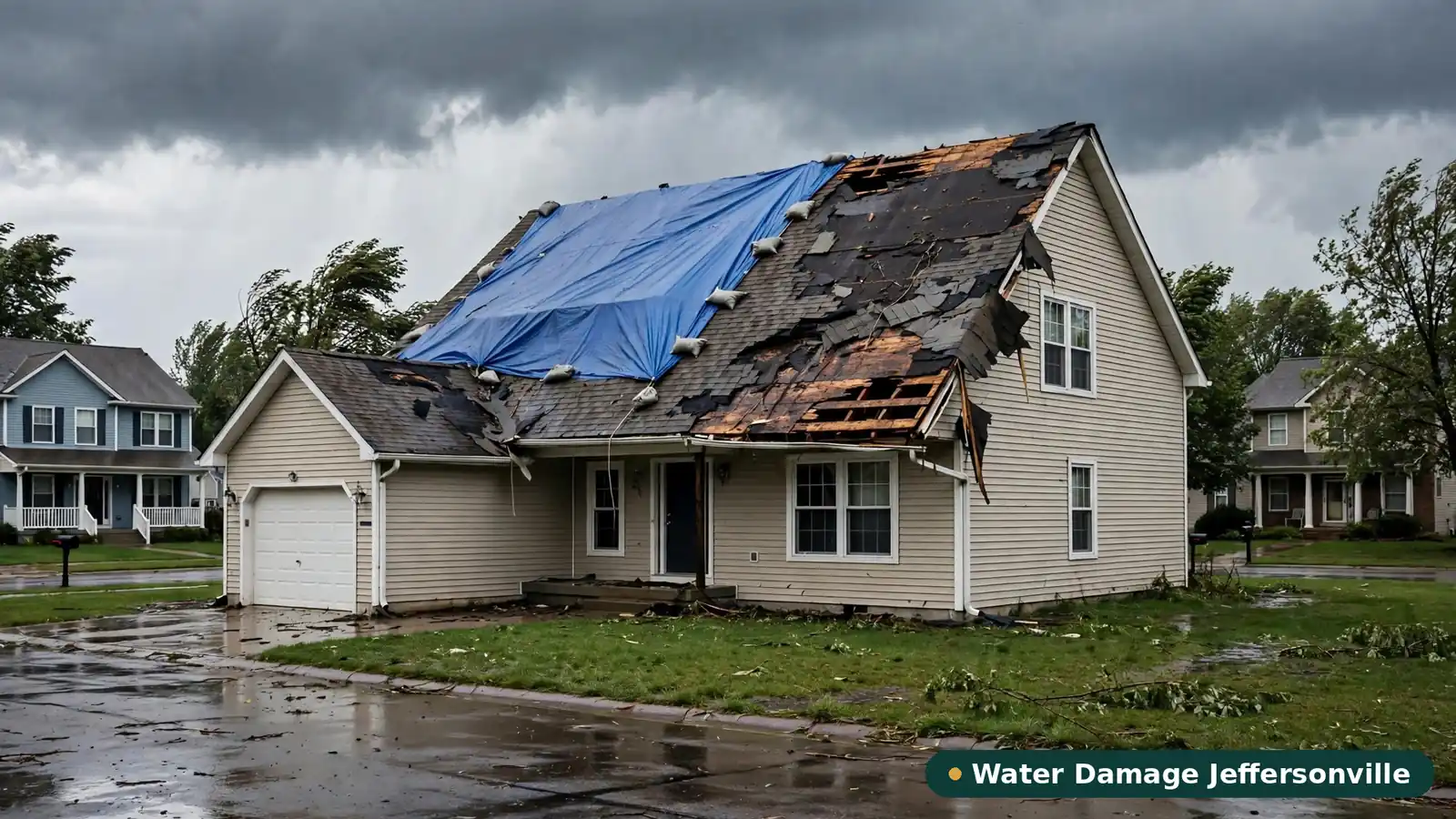
Severe Weather Season in Jeffersonville and Clark County
Southern Indiana sits in a busy corridor for severe weather. From March through June, strong cold fronts sweep across the Ohio Valley and bring damaging winds, large hail, intense downpours and tornado warnings. Clark County knows how serious it can get: the March 2012 tornado outbreak devastated Henryville, just up the road from Jeffersonville. Summer adds pop-up thunderstorms, and the remnants of Gulf hurricanes sometimes reach the area in late summer and fall with days of heavy rain.
Storm water reaches homes in several ways:
- High winds lift and tear shingles, peel flashing and damage ridge vents.
- Hail cracks shingles and skylights, sometimes causing leaks that show up weeks later.
- Mature trees along older streets in Downtown, Claysburg and Oak Park drop limbs on roofs.
- Wind-driven rain pushes through window frames, siding seams and soffits.
- Gutters overflow during intense downpours and dump water against the foundation, sending it into basements.
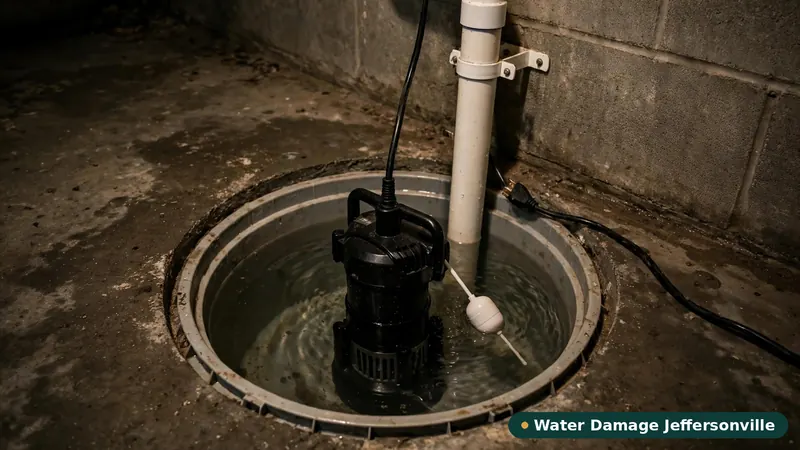
- Power outages shut off sump pumps right when the ground is saturated.
What Should You Do When a Storm Opens Your Jeffersonville Roof?
The bottom line: get people away from sagging ceilings, put buckets under drips, move valuables out of the way, turn off power to any light or outlet near the water, photograph the damage and call for emergency tarping and water removal. Do not climb onto a wet or damaged roof. The faster water is stopped and extracted, the less insulation, drywall and flooring need replacing.
Our Storm Damage Response in Jeffersonville
- Step 1: Stop more water. We tarp damaged roof sections, board up broken windows and cover openings.
- Step 2: Document. Exterior and interior damage, openings and every wet room are photographed before work begins.
- Step 3: Extract. Pumps and extractors remove water from floors, carpet and basements.
- Step 4: Remove what holds water. Soaked attic insulation, sagging ceiling drywall and wet wall insulation come out so framing can dry.
- Step 5: Dry. Dehumidifiers and air movers dry rooms, attics and wall cavities, with generator power if needed.
- Step 6: Treat. Affected framing gets an antimicrobial treatment.
- Step 7: Rebuild. Ceilings, walls, insulation and floors are restored, and we coordinate with your roofer.
Hidden Storm Damage to Check in Jeffersonville Homes
- Attic insulation and roof sheathing near valleys, vents, chimneys and skylights
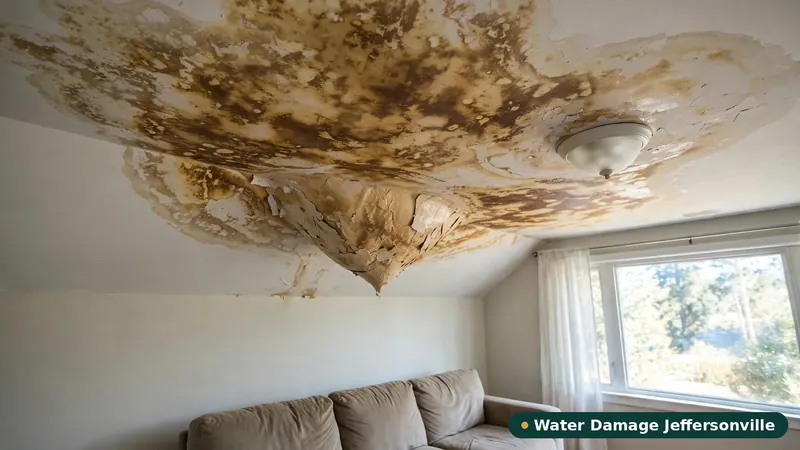
- Ceilings on the top floor, especially faint new rings that appear days later
- Wall cavities under windows and around doors where wind-driven rain gets in
- Exterior sheathing behind damaged siding
- Window sills and the subfloor in front of exterior doors
- Basements, where storm runoff and sump failures often add a second source of water
Moisture meters and thermal imaging find wet materials before they turn into stains, odor or mold.
First Steps After a Severe Storm in Jeffersonville
- Stay clear of downed power lines and assume every one is live.
- Run generators outdoors only, far from doors, windows and the garage.
- Photograph and video damage inside and out before any cleanup.
- Take reasonable steps to stop more damage, like tarping or catching drips. Insurers generally expect this and often reimburse it.
- Save receipts for tarps, fuel, hotel nights and emergency work.
- Read any work agreement carefully, and be cautious with door-to-door crews asking for large payments upfront.
- Check your sump pump once power returns; storms and outages are when basements flood.
Tornado and Wind Damage: Tarping and Board-Up in Jeffersonville and Clark County
Clark County knows tornadoes. The March 2012 tornado that tore through Henryville is a reminder that severe storms can reach anywhere in Southern Indiana. After wind damage, the first job is closing the house so rain cannot keep getting in.
- Emergency roof tarping: we cover damaged roof areas with heavy tarps fastened to the structure, so rain stays out until permanent repairs are made.
- Board-up: broken windows and doors get boarded to keep weather, animals and intruders out.
- Water extraction: rain that already got in is pulled from carpet, floors and ceilings before it spreads.
- Ceiling and attic checks: wet insulation and sagging drywall are removed so the attic can dry.
- Safety first: stay away from downed lines, and do not climb onto a damaged roof yourself.
Storm damage is often a mix of wind, rain and hidden water. Our storm and roof leak water damage crew documents everything with photos and moisture readings, which helps with your claim.
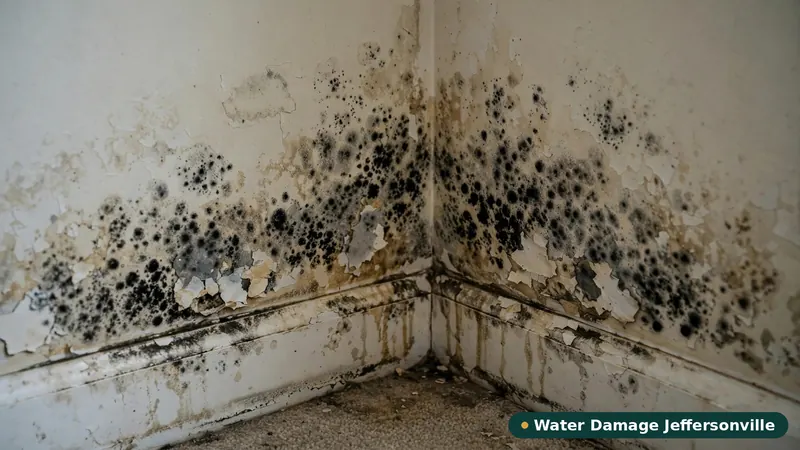

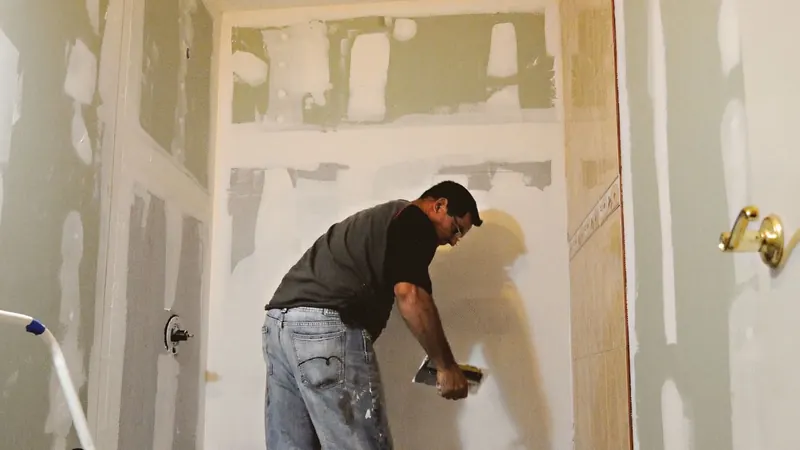
Storm and Roof Leak Water Damage in Jeffersonville, IN at a Glance
Short answer: after a severe storm in Jeffersonville, cover roof and window openings, extract water and dry attics, ceilings and walls before mold starts. Spring hail, high wind and fallen limbs cause most storm leaks here.
- First steps: stay safe, photograph damage, call your insurer and a restoration crew.
- Tarping: temporary covers stop more rain from getting in.
- Hidden damage: wet attic insulation and wall cavities.
- Insurance: sudden storm damage is often covered; wear and tear usually is not.
Water Damage Jeffersonville tarps, extracts and dries after storms. For ceiling repairs, see our ceiling water damage repair page.
Hail Damage in Clark County: Hidden Roof Leaks After the Storm
Hail is common in Clark County during spring storm season. Hail damage often does not leak right away. Bruised shingles lose granules, crack over the following weeks and start letting water in with later storms.
- Look for dents on gutters, downspouts, vents and car hoods after a hailstorm.
- Check for granules collecting at the bottom of downspouts.
- Watch top-floor ceilings for new stains in the weeks after a storm.
- Have a roofer inspect the roof before filing a claim, and keep the date of the storm.
- Many policies set a time limit for reporting hail damage, so do not wait long.
Water Damage Jeffersonville checks attics and upper-floor ceilings with moisture meters after hailstorms, so slow leaks are found before mold starts.
Fallen Trees and Limbs: Water Damage After Jeffersonville Wind Storms
Jeffersonville's older neighborhoods are full of mature trees. In spring storms and summer wind events, falling limbs are one of the fastest ways water gets into a home.
- A limb through the roof lets rain pour into the attic and ceilings within minutes.
- Smaller branches can puncture shingles or tear gutters loose without obvious damage from the ground.
- Trees leaning on a house can shift and open new gaps over the following days.
- Stay out of rooms under a damaged section of roof until it has been checked.
- Photograph the tree and damage before anything is moved for your insurer.
Water Damage Jeffersonville can help clear water from inside the house while tree crews and roofers handle the outside.
Storm & Roof Leak FAQs for Jeffersonville, IN
Questions Clark County homeowners ask most after severe weather.
Do you tarp roofs after storm damage in Jeffersonville?
Yes. Emergency roof tarping and boarding up broken windows are part of our storm response, because stopping more water from getting in comes first. Permanent roof repair is done by a roofer once the inside is dry.
Is storm water damage covered by insurance in Indiana?
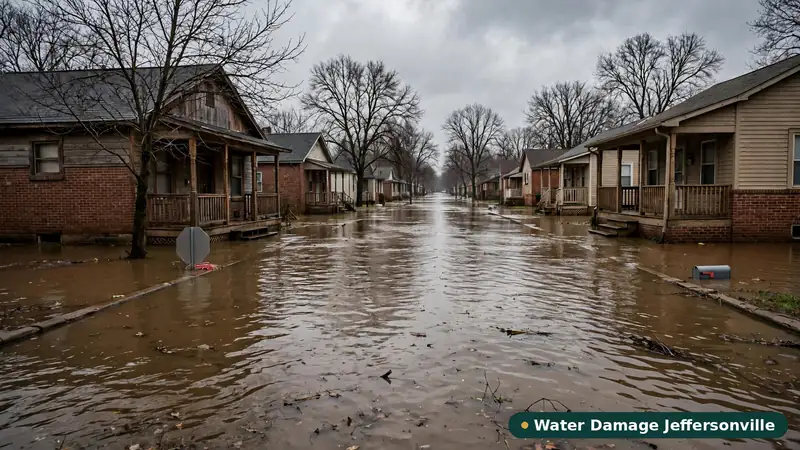
When wind, hail or a falling tree opens the roof or a window and rain comes in, Indiana homeowners policies commonly cover the resulting water damage. Water rising from the ground or a creek is a flood loss instead. Photograph the openings and call your agent right away.
Can wet attic insulation be saved?
Usually not. Soaked blown-in or batt insulation compresses and holds water against the ceiling and framing. We remove it, dry the attic and replace it after everything is dry.
Can hail damage cause roof leaks?
Often yes, though it may not show for days. Hail can crack shingles and knock granules loose so small leaks start weeks later. If you notice new ceiling stains after a hailstorm, have the attic checked and call your roofer and insurer promptly, since policies often have reporting deadlines.
Call Our Jeffersonville Storm Response Crew Now
The next round of rain will push more water through an open roof. Call now and our Jeffersonville crew will tarp, extract and start drying.
Clark County knows severe weather. The March 2012 tornado outbreak devastated Henryville just north of Jeffersonville, and spring and summer storms still bring hail, straight-line winds and falling trees across the area every year. Water Damage Jeffersonville tarps roof openings, dries attics, walls and basements, and documents every step for your adjuster.
Water Damage Jeffersonville serves Jeffersonville 47130, Clarksville, New Albany, Sellersburg, Charlestown, Henryville, Memphis, Utica and nearby Clark County.